
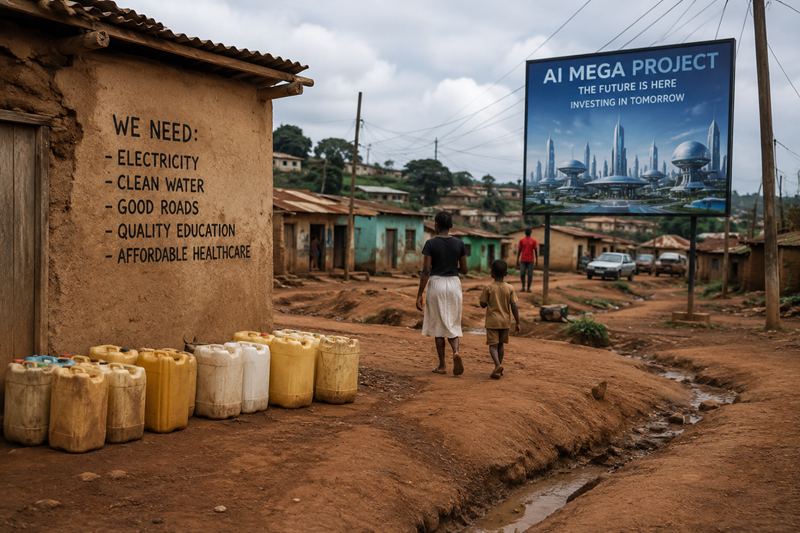
Africa stands at a pivotal moment with artificial intelligence. Global excitement around large language models, billion-dollar data centers, and national AI strategies often drowns out a more urgent reality: the continent is neglecting high-impact, low-cost AI applications that could solve its most pressing problems today. While conversations swirl around AI mega-infrastructure, millions still lack basic healthcare diagnostics, millions of students learn with acute teacher shortages, and citizens endure opaque, inefficient governance. This is Africa’s AI blind spot.
The Allure of Prestige vs. the Power of Practicality
It is tempting to dream big. Announcements of new AI institutes, sovereign AI clouds, and partnerships with global tech giants generate headlines and political capital. Yet building advanced AI infrastructure requires reliable electricity, high-speed internet, massive datasets, and specialized talent. These resources remain scarce across much of the continent.
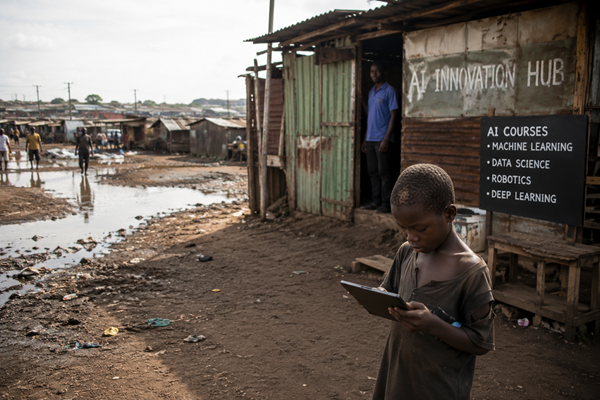
Chasing prestige projects while basic systems crumble is a strategic error. The highest returns on AI investment in Africa today lie in augmenting and amplifying existing systems, not replacing them with futuristic infrastructure. Simple, deployable AI tools, often running on modest hardware or mobile phones, can deliver outsized impact immediately.
Healthcare: AI That Saves Lives Now
Africa bears a disproportionate share of the global disease burden: malaria, tuberculosis, maternal mortality, and neglected tropical diseases. Many rural clinics lack specialists or even basic diagnostic equipment.
Practical AI solutions exist today:
- Image recognition models that diagnose malaria, skin diseases, or diabetic retinopathy from smartphone photos with accuracy rivaling specialists.
- Predictive analytics using readily available data (patient records, weather, movement patterns) to forecast disease outbreaks.
- Chatbots and voice-based systems in local languages that provide health information, triage patients, or support community health workers.
These tools do not require massive data centers. They can run offline or with intermittent connectivity. Countries like Kenya and Rwanda have piloted such systems with promising results. Scaling them nationally would save far more lives in the next decade than any flagship AI city project.
Education: Countering JAPA with Intelligent Support
JAPA, the mass emigration of talent, has hollowed out Africa’s teaching workforce. Classrooms are overcrowded, teachers are overworked and underpaid, and learning outcomes remain poor despite rising enrollment.
AI offers immediate relief:
- Teacher augmentation tools: Automated grading, lesson plan generation, and personalized student progress tracking free teachers to focus on mentorship and high-value instruction.
- Student-facing AI tutors: Adaptive learning apps that work in low-bandwidth environments and local languages, helping students bridge gaps when teachers are absent or underqualified.
- Content generation in indigenous languages for curricula that currently suffer from acute material shortages.
A single well-designed AI system can support thousands of students and dozens of teachers at minimal marginal cost. In a continent losing doctors, engineers, and teachers to greener pastures abroad, AI is one of the few scalable ways to multiply the impact of remaining professionals.
Governance: AI for Transparency and Accountability
Bad governance, corruption, inefficiency, and lack of transparency remains one of Africa’s most stubborn development obstacles. AI can shine here too:
- Automated analysis of government contracts, budgets, and procurement data to flag anomalies and potential corruption.
- Citizen feedback platforms using voice and SMS for real-time reporting on service delivery.
- Predictive systems that optimize resource allocation (fuel subsidies, fertilizer distribution, healthcare supplies) and reduce leakages.
- Blockchain-AI hybrids for land registries and digital identity to cut bureaucratic rent-seeking.
These applications directly attack the trust deficit between citizens and the state. Transparent systems build investor confidence and citizen buy-in more effectively than lofty AI visions.
Why This Matters: Opportunity Cost Is Massive
Every dollar and every talented engineer directed toward prestige AI projects that may take years to deliver tangible benefits is a dollar and talent not used to reduce maternal mortality, improve literacy rates, or cut corruption. Africa does not need to wait for perfect conditions to begin winning with AI. Mobile phone penetration, improving digital payment systems, and growing local tech talent provide fertile ground for pragmatic deployment.
Other regions have shown the way. China and India started with practical applications, agricultural advisory services, telemedicine, and basic automation, before scaling to frontier AI. Africa can leapfrog by focusing on high-ROI basics first.
A Smarter Path Forward
African governments, development partners, and entrepreneurs should:
- Prioritize problem-first AI: Identify the top 10 daily pains in healthcare, education, and public service delivery, then fund AI solutions aggressively.
- Invest in enabling foundations that matter now: reliable power for clinics and schools, digital public infrastructure (IDs, payments, data standards), and local language datasets.
- Create regulatory sandboxes and fast procurement for proven, low-cost AI tools rather than only courting big foreign infrastructure deals.
- Build public-private talent pipelines that reward engineers solving real African problems instead of only those chasing global acclaim.
Africa does not suffer from a lack of ambition. It suffers from misallocated ambition. The real AI revolution for the continent will not begin with the most advanced models or largest data centers. It will begin when a rural health worker gets an accurate malaria diagnosis from a phone, when a teacher in a crowded classroom receives intelligent support, and when citizens can track every naira of public spending.
The future belongs to those who solve real problems first. Africa’s AI strategy should reflect that truth: pragmatism today, ambition tomorrow. The basics are not boring. In Africa’s context, they are revolutionary.
This is why QuickHelp Nigeria exists.